
Challengers
Serve after serve

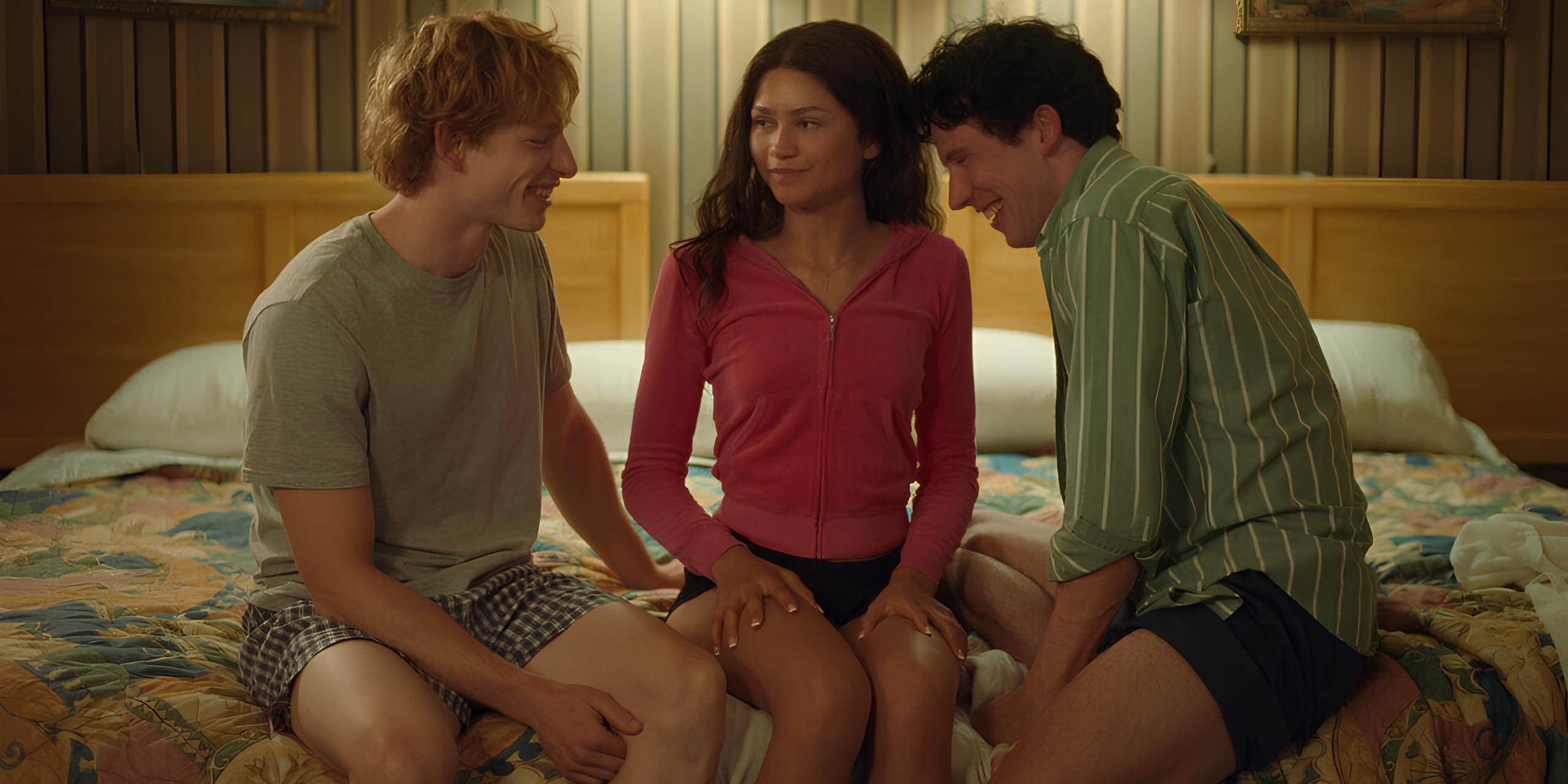
If you see any promotional material from Challengers, Luca Guadagnino’s latest work, you'll notice its focus on the attractiveness of its cast, being sold as a sexy tennis narrative. While it does indeed feature incredibly hot people, its depth extends far beyond this superficial allure. It’s less about two men vying for the same woman’s attention, and more an exploration of what happens when one’s ego and ambition spill over their personal life, with tennis as the perfect vehicle to address these concerns.
Challengers follows tennis prodigy-turned coach Tashi Duncan (Zendaya), who has transformed her husband, Art Donaldson (Mike Faist), into a world-famous Grand Slam champion. Tired of his recent losing streak, she signs him up for a Challenger event, where he has to square up against Patrick Zweig (Josh O’Connor), his former best friend and Tashi’s former boyfriend. Throughout the match, a series of flashbacks reveals the stakes of these two opponents.
The story takes us on a journey through time, starting in 2019 and spanning all the way back to 2006. At the beginning, we find Patrick and Art facing off in the Challenger tournament, with Tashi observing from the sidelines —a recurring motif. As the plot unfolds and jumps in-between periods, it gradually unveils the flawed and toxic nature of the characters amid their evolving relationships, ambitions, and struggles throughout their late teens, twenties, and early thirties.
Although the movie doesn't directly delve into the politics of its era, its timing remains significant. Taking place in late 2019, just before the pandemic, the final showdown between Art and Patrick triggers a sense of nostalgia for a world on the brink of transformation. It captures a fleeting moment, a time of anticipation and uncertainty, now rendered even more poignant by the actual five years that have already passed. Through its nuanced storytelling and examination of power dynamics, Challengers encourages audiences to reflect not only on the larger changes within the characters' world, but also on the shifts we've experienced ourselves, both positive and negative.
Certain cinematographic decisions significantly intensify the tension on the court. The exhilarating, fast-paced action is enhanced by point-of-view shots from the players and even from the tennis ball itself. We're propelled back and forth, following the speed and trajectory of the ball, getting intimately close to the three leads as sweat drips from their faces. Guadagnino also positions the camera in a semi-transparent, almost otherworldly dimension, providing a unique vantage point from below the tennis match. This immersive approach heightens the engagement, particularly as the movie enters its climactic final moments.
The score has swiftly become a standout album for me this year. Trent Reznor and Atticus Ross depart from their signature eerie, David Fincher musical compositions to introduce intoxicating techno beats into the court, resulting in a mesmerizing experience. With each swing of their rackets, Tashi, Art, and Patrick unleash this sonic brilliance that electrifies the atmosphere, taking the matches to unparalleled levels of intensity. Every stroke creates a resounding echo that reverberates through the air, building a crescendo of rhythm and tempo, captivating both in-universe spectators and the actual film audience alike with a cathartic response.
If you ask me, another successful entry in Luca Guadagnino’s canon of cinematic desire.